Our verdict
The S95F solves a problem that affects many expensive TVs: reflections. It is a QD-OLED, a type of OLED with a quantum-dot layer for richer colour, so each pixel makes its own light and dark scenes look properly dark. Independent reviewers found its anti-glare screen stays clear when daylight or lamps would normally distract. It has four HDMI 2.1 ports and a 165Hz refresh rate for smooth gaming, and 70W built-in speakers, stronger than most slim TVs'. It is not perfect. The darkest parts of a film can lose fine detail, the anti-glare finish slightly softens very fine picture detail, and there is no Dolby Vision. At about £1,879 for 65 inches, it is the strongest choice for a bright living room, not automatically the best for films in complete darkness.
Buy it if
- Your living room has large windows or bright lamps
- You watch a mixture of films, sport and games
- You want good sound before adding a soundbar
Skip it if
- You mainly watch films in a completely dark room
- You want Dolby Vision, which this TV does not support
- You already own a recent high-end TV and expect a dramatic upgrade
How it would fit your home
A bright family living room
The anti-glare screen keeps TV, sport and games clear without making everybody close the curtains.
Modern console gaming
A 165Hz screen and four HDMI 2.1 ports make it easy to connect several gaming devices.
A dedicated dark cinema room
The picture is still excellent, but a glossier rival may keep slightly more fine detail in the darkest scenes.
The details, in plain English
Watching during the day
This is the S95F's special skill. TechRadar, What Hi-Fi? and RTINGS all found its anti-glare finish unusually effective; TechRadar names it OLED Glare Free 2.0, and Expert Reviews says it removes almost all reflections. A bright window or lamp is far less likely to show as a clear reflection. It is also very bright: TechRadar measured about 2,132 nits of peak HDR brightness in Filmmaker Mode on the 55-inch model, and Expert Reviews measured 2,334 nits on a 10% window in Standard mode.
Watching films at night
On an OLED each pixel can switch fully off, so dark scenes look deep and colours stay rich. Two review teams noticed, however, that the very darkest details can disappear into black. A picture setting can recover some of that detail. The S95F supports HDR10, HDR10+ and HLG but not Dolby Vision, so Dolby Vision films play in a standard HDR format. The anti-glare finish that works so well by day can also make the finest detail look slightly softer in a dark room.
Playing games
Both TechRadar and Expert Reviews list four HDMI 2.1 ports (one with eARC, the connection that sends sound to a soundbar) and 4K at up to 165Hz, so a PlayStation, Xbox or gaming PC can show up to 165 frames a second. Expert Reviews also lists FreeSync Premium Pro variable refresh rate, which keeps motion smooth. Most consoles top out at 120Hz, so the 165Hz mainly benefits a gaming PC. The first setup needs a little care.
Sound
TechRadar and Expert Reviews both list a 4.2.2-channel, 70W speaker system with Dolby Atmos, far more power than the 20W of Samsung's cheaper S85H. Voices are clear and the sound follows the action more convincingly than on many thin TVs. At high volume it can become strained, so film fans who like a big, powerful sound should still plan for a soundbar.
Apps and catch-up TV
The main streaming services and individual UK broadcaster apps are available. The inconvenience is that no single place brings all free catch-up programmes together. You can still watch BBC, ITV and Channel 4 programmes, but you may move between more apps than on some rival TVs. Check that your favourite catch-up services are on the TV before you buy.
Strengths and drawbacks
What it does well
- Excellent control of reflections from windows and lamps
- OLED picture: rich colour and deep dark scenes
- Four HDMI 2.1 ports and up to 165Hz: smooth, quick games on every input
- 70W 4.2.2-channel built-in speakers: stronger than most slim TVs
- Bright enough for sport and daytime TV without closing the curtains
What to watch out for
- Fine detail can disappear in the darkest film scenes
- The anti-glare finish slightly softens very fine picture detail
- No Dolby Vision: films in that format play in HDR10+ or standard HDR instead
- Catch-up programmes are spread across separate broadcaster apps
Several high-end rivals can look slightly brighter or keep more detail in a dark room. Samsung's advantage is more practical: this TV is much easier to watch when windows and lamps reflect in the screen. Choose it for the room you actually have, not because one laboratory figure is larger than another.
Alternatives we have reviewed
| Product | Our verdict | Price | Buy |
|---|---|---|---|
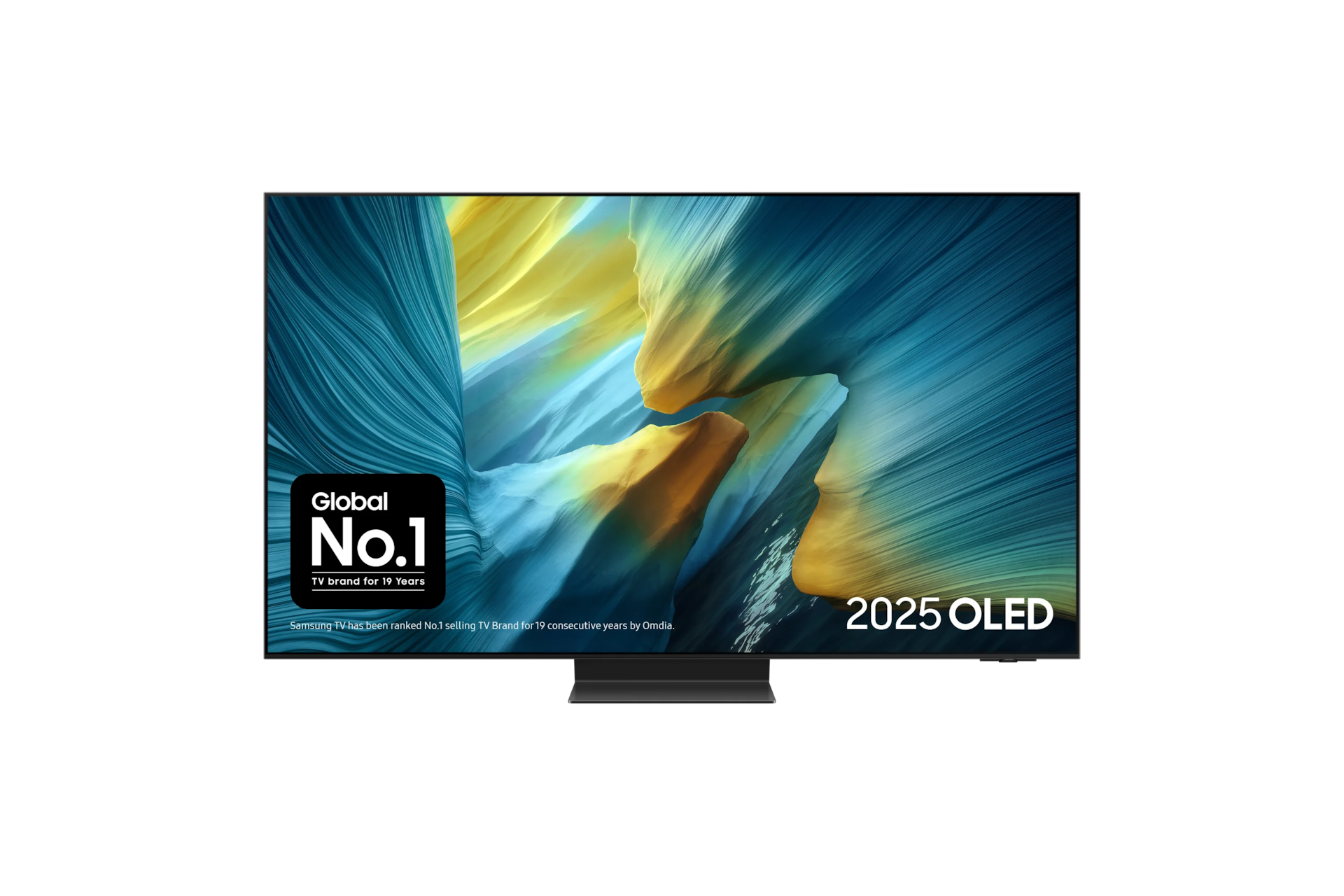 Samsung S95F (QE65S95F) (this one) Samsung S95F (QE65S95F) (this one) | Our bright-room favourite, with small compromises for films in complete darkness. | £3,399RRP · 65" model, RRP recorded 12 Oct 2026 | Check price |
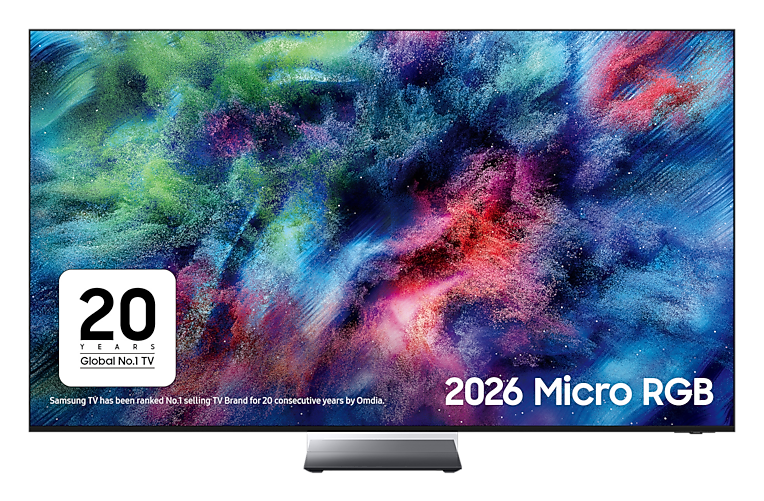 Samsung R95H (65-inch) Samsung R95H (65-inch) | Impressive technology, but What Hi-Fi?'s independent review found it trails similarly priced OLED TVs, so it is hard to recommend at £3,099. | £3,299RRP · 65 inches, RRP recorded 12 Oct 2026 | Check price |
 Samsung S99H 65-inch Samsung S99H 65-inch | A very bright OLED for bright rooms with superb gaming support, but its design and £3,199 price suit a wall-mounted setup with a soundbar planned. | £3,299RRP · 65-inch television, RRP recorded 12 Oct 2026 | Check price |
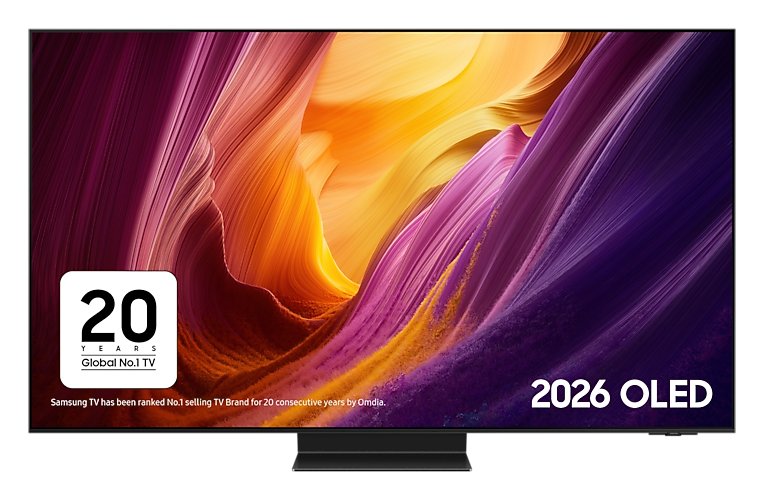 Samsung S95H (65-inch) Samsung S95H (65-inch) | One of the best OLED TVs for bright rooms and gaming, suited to households that want a high-end picture with excellent reflection control. | £2,59965 inches, Price recorded 24 Sept 2026 | Check price |
Not sure it is the right one for you?
We email three options and one clear recommendation, around your budget and home, within three working days.
Worth reading next


Where our findings come from
Research-based review. We compared independent findings from RTINGS, TechRadar, What Hi-Fi?, Expert Reviews and FlatpanelsHD, and quote their findings rather than our own. Specifications come from TechRadar and Expert Reviews. Where they agreed - reflection control, dark-scene detail, gaming and sound - we explain what a buyer will notice at home. We did not test the TV ourselves.
- RTINGS: Samsung S95F OLED Review
- TechRadar: Samsung S95F review: easily one of 2025's best OLED TVs for bright rooms
- WhatHiFi: Samsung S95F review: Samsung's best-ever OLED
- Expert Reviews: Samsung S95F (QE65S95F) review
- FlatpanelsHD: Samsung S95F (QD-OLED) review
- WhatHiFi: LG G5 (OLED65G5) review
- TechRadar: Samsung claims its latest QD-OLED panel can hit 4,000 nits — but based on my testing last year, I doubt it
- TechRadar: Sony Bravia 8 II review: a better, brighter Sony OLED TV that sounds as good as it looks
- TechRadar: Panasonic Z95B review: a flagship OLED TV that combines refined pictures with powerful sound