Our verdict
The HS3100 pairs a 90cm soundbar with a wireless subwoofer. It is a 3.1 system: three channels at the front, including a centre channel just for voices, plus the ".1", a separate speaker for bass. The centre channel keeps speech apart from music and effects, and the subwoofer adds weight to films. Independent listening by HIFI.DE found speech clear and the sound fuller than ordinary TV speakers, although it became less composed at high volume. Hisense quotes 480W, but that is a maximum power figure, not a measure of sound quality. It connects to your TV by HDMI ARC or optical. The recorded £95 offer makes it worth considering for a normal living room, provided you want better front-of-room sound rather than real speakers behind you.
Buy it if
- You regularly turn up the TV to hear conversations
- You want stronger film sound without placing speakers behind the sofa
- Your TV has HDMI ARC or an optical output and you have room for the subwoofer
Skip it if
- You have no floor space or socket for a separate bass box
- You want real rear-speaker surround or height effects
- You need a very loud system for a large room
How it would fit your home
Hear a quiet conversation
The dedicated centre speaker helps keep speech separate from music and effects, and HIFI.DE found dialogue natural and clear. It may save you from reaching for the volume during a drama.
Make film night feel fuller
The wireless subwoofer adds bass to the soundbar's front speakers. Its wireless link saves a signal cable across the floor, but the box still needs mains power and some breathing room.
Connect it without guesswork
Use the TV socket labelled ARC with the included HDMI cable if your TV has one; otherwise use the optical input. Bluetooth is useful for music from a phone, but it is not the best TV connection.
The details, in plain English
What 3.1 means in your room
The "3" is three front channels: left, right and a centre channel for voices. The ".1" is the separate subwoofer, which handles deep bass such as explosions and film scores. Sound can feel wider and fuller than a TV's own speakers, but there are no rear speakers in the box. Virtual surround processing widens the sound, but do not buy it expecting aircraft or footsteps to move accurately behind you.
Connections
HDMI ARC (Audio Return Channel) lets the TV send its sound to the soundbar over one HDMI cable, and usually lets your TV remote control the volume. The HDMI cable is in the box. If your TV has no ARC socket, the optical input is the fallback. Bluetooth lets you play music from a phone or tablet, but for TV sound the wired connections are more reliable.
Sound and volume
HIFI.DE found speech clear and natural, and the overall sound fuller than ordinary TV speakers. It also found the system less composed at high volume, so it suits a normal living room better than a large, open-plan space. Hisense's 480W rating is a maximum power figure; it tells you little about clarity, so treat it as a guide to the category rather than a promise of loudness.
Check the space and the offer
The bar is about 90cm wide, so check your TV stand and whether it would block the bottom of the screen or the TV's remote receiver. A wall-mount kit is included if you prefer to fix it below a wall-mounted TV. £95 was the exact-model Amazon price on 20 September 2026; check the current listing, included subwoofer, seller and delivery before ordering.
Strengths and drawbacks
What it does well
- 3.1 channels with a dedicated centre speaker: dialogue is easier to follow
- The included wireless subwoofer gives films more weight than thin TV speakers
- HDMI ARC and optical connections, plus Bluetooth for music from your phone
- An HDMI cable, remote and wall-mount kit are included
What to watch out for
- The subwoofer still needs floor space and its own power socket
- Virtual surround is not the same as rear speakers or Dolby Atmos height effects
- HIFI.DE found the sound less composed at high volume
- The 480W figure is a manufacturer maximum and says little about how it sounds
Choose the HS3100 for clearer speech and fuller front sound at a low price. Compare a larger system only if you need real rear surround, Dolby Atmos height effects, stronger high-volume performance or a setup without a separate subwoofer.
Alternatives we have reviewed
| Product | Our verdict | Price | Buy |
|---|---|---|---|
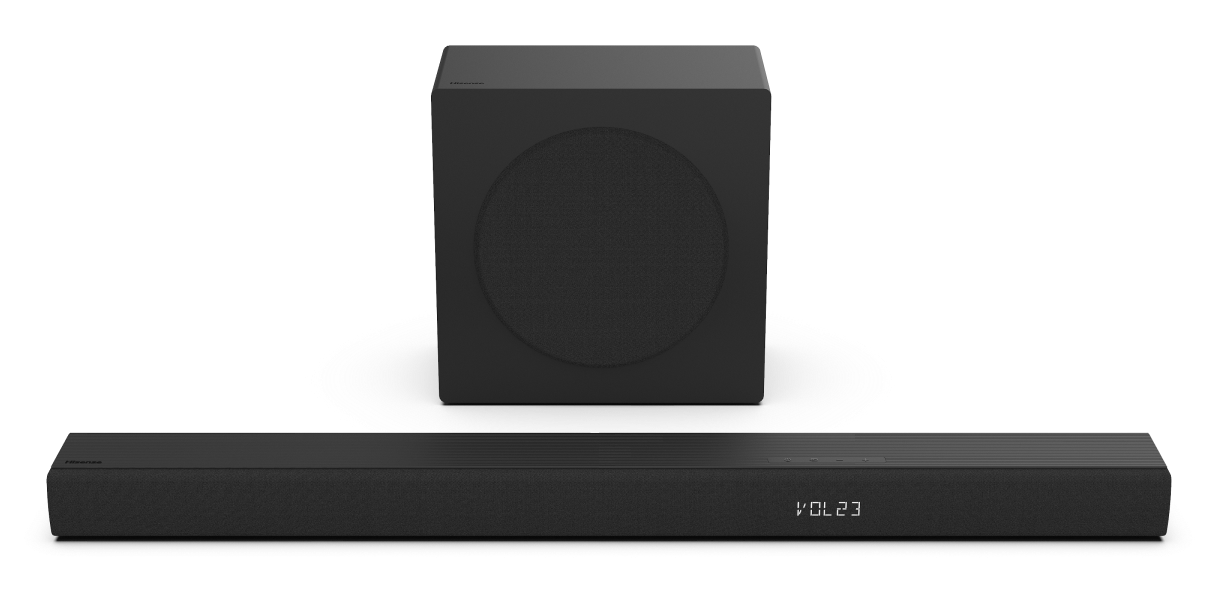 Hisense HS3100 (this one) | A practical low-cost step up from thin TV speakers if you have room and a spare socket for the included wireless subwoofer. | £95Standard retail package, Price recorded 20 Sept 2026 | Check price |
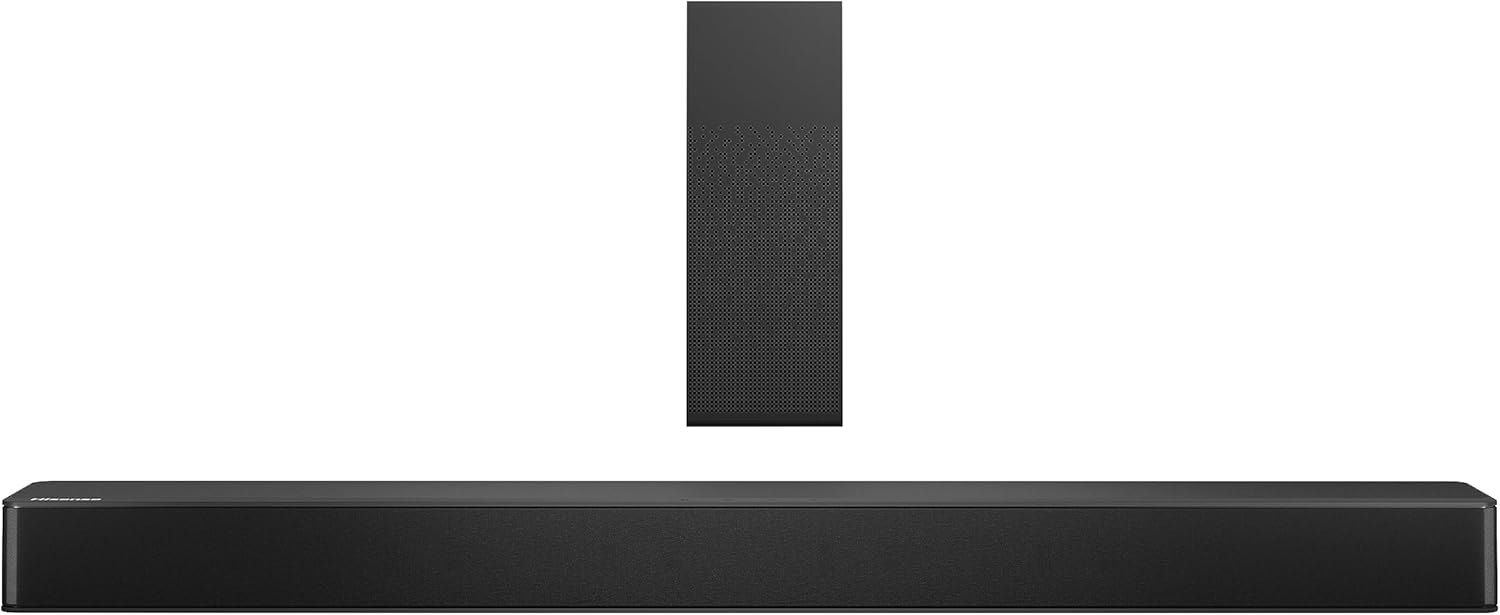 Hisense HS2100 | A cheap way to add bass and clearer TV sound, provided your TV can connect by HDMI or optical and you do not expect true surround sound. | £81Standard retail package, Price recorded 1 Aug 2026 | Check price |
 LG US40T | A sensible budget step up from TV speakers if you want a wireless subwoofer for fuller films and do not need Dolby Atmos or Wi-Fi. | £159Standard retail package, Price recorded 1 Aug 2026 | Check price |
 LG SQM1 | A cheap, compact way to make TV speech clearer, provided your TV has an optical output and you do not need HDMI, surround sound or deep bass. | £49.99Standard retail package, Price recorded 1 Aug 2026 | Check price |
Not sure it is the right one for you?
We email three options and one clear recommendation, around your budget and home, within three working days.
Worth reading next


Where our findings come from
Research-based assessment updated 20 September 2026. Hisense supplied UK connections, dimensions and included accessories; HIFI.DE listened to the HS3100. We have not performed our own listening test. The 480W figure is a manufacturer maximum, not a measure of sound quality.